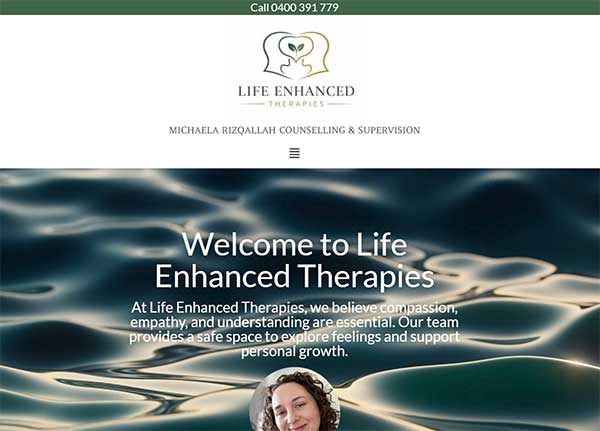
Thank you Michaela for giving me the opportunity to creat your new website. Michaela provides Counselling Services on the ground in Bundaberg and online across Australia.
Here is the new website to view
If you are interested in affordable relationship therapy across Australia, check ot what Life Enhanced Therapy can do for you. From relationship counselling to individual counselling, family therapy, EMDR and at home counselling Life Enhanced Therapy is a full service NDIS registered provider.
The Importance of an Engaging Website for Counselling Services
An engaging website is a central part of how practitioners communicate with potential clients, establish trust, and provide access to support. For many individuals, the decision to seek counselling begins online, often in private and during moments of vulnerability. A website therefore becomes a digital front door, offering reassurance, clarity, and accessibility before any direct contact occurs. When thoughtfully designed and maintained, it can strengthen credibility, demonstrate professionalism, and make support feel approachable. Conversely, a poorly presented or outdated website may discourage people from reaching out, regardless of the quality of care offered.
Establishing Trust and Credibility
Trust is fundamental in counselling relationships, and the website plays a major role in building that trust from the outset. Visitors commonly look for information about qualifications, professional affiliations, therapeutic approaches, and experience. Presenting this information clearly and transparently helps reassure users that they are considering a legitimate and competent service. Accurate details about registration with relevant professional bodies, adherence to ethical guidelines, and ongoing training reinforce credibility.
Visual presentation also contributes to perceived reliability. A clean layout, readable text, and logical navigation signal attention to detail and professionalism. When users feel confident that a service is organised and accountable, they are more likely to initiate contact. This initial trust-building function is especially important because potential clients often compare multiple services before making a decision.
Improving Accessibility to Support
Accessibility is one of the strongest arguments for maintaining an engaging website. People seek counselling at different times and under varying circumstances, and many prefer to research options outside standard business hours. A website allows information to remain available continuously, supporting individuals who may not yet feel comfortable making a phone call.
Clear descriptions of services, session formats, availability, and fees reduce uncertainty. Practical details such as appointment procedures and contact methods help remove barriers to access. Websites can also communicate whether remote sessions are available, outline confidentiality practices, and explain cancellation policies. This transparency ensures that visitors can assess suitability without unnecessary obstacles. By improving accessibility, an effective website expands the reach of counselling services and promotes timely engagement with support.
Communicating Professional Identity and Approach
Counselling encompasses a wide range of theoretical orientations and specialisations. An engaging website provides space to explain therapeutic methods, areas of focus, and the philosophy guiding the service. This communication is essential because clients benefit from choosing a practitioner whose approach aligns with their needs and expectations.
Describing therapeutic styles in plain, respectful language allows visitors to understand what sessions may involve. Information about experience with particular age groups or clearly defined areas of practice helps potential clients determine relevance. Authentic presentation of professional identity fosters alignment between client and counsellor, which research consistently identifies as an important factor influencing outcomes. A website that effectively communicates approach therefore contributes to more informed and constructive initial connections.
Supporting Emotional Comfort and Reducing Anxiety
Seeking counselling can feel intimidating. An engaging website can soften this experience by providing reassurance and familiarity before the first appointment. Tone of language, visual calmness, and clarity of explanation all influence emotional comfort. Visitors benefit from knowing what to expect, how sessions typically unfold, and what confidentiality entails.
Providing answers to common practical questions can reduce anxiety associated with uncertainty. Explaining session duration, outlining intake procedures, or clarifying privacy protections helps individuals feel prepared. When visitors perceive that their concerns are anticipated and respected, they are more likely to feel safe initiating contact. Emotional comfort facilitated through online presentation can therefore play a measurable role in encouraging help-seeking behaviour.
Enhancing Communication Efficiency
An engaging website does more than attract attention; it streamlines communication between practitioner and client. Clear presentation of information reduces repetitive enquiries and allows administrative processes to function efficiently. When users can easily find answers to routine questions, time is saved for both parties.
Providing structured information also ensures consistency in messaging. Policies, expectations, and service boundaries can be presented accurately and without misunderstanding. This consistency protects professional standards and helps maintain appropriate therapeutic relationships. Efficient communication supported by the website allows counsellors to dedicate more time to clinical work rather than administrative clarification.
Reflecting Ethical and Professional Standards
Counselling professionals operate within defined ethical frameworks that emphasise informed consent, confidentiality, and respect for autonomy. A website contributes to these principles by presenting accurate and current information. Keeping content updated demonstrates responsibility and ensures potential clients are not misled about services or availability.
Privacy considerations must also be addressed transparently. Explaining how personal information is handled and clarifying limitations of confidentiality supports informed decision-making. Ethical awareness reflected through digital communication reinforces trust and aligns online presentation with professional obligations. A well-maintained website therefore supports not only engagement but also adherence to established standards of practice.
Encouraging Community Awareness
Beyond serving individual clients, an engaging website raises awareness of counselling as a legitimate and valuable form of support. Informative content describing the purpose of counselling and outlining the types of issues commonly addressed helps reduce stigma. When presented respectfully and accurately, this information contributes to broader public understanding of mental health services.
Increased awareness benefits both practitioners and communities. People who might not otherwise consider counselling may recognise its relevance, while existing clients can share accessible information with others. By acting as an educational resource, the website expands its function beyond marketing and becomes a tool for community engagement and understanding.
Learn More about Life Enhanced Therapy in Bundaberg
The importance of an engaging website for counselling services lies in its ability to support trust, accessibility, clarity, and ethical communication. It is often the first interaction individuals have with a practitioner and therefore shapes expectations and perceptions before any direct contact occurs. Through transparent presentation of credentials, thoughtful communication of therapeutic approach, and careful attention to emotional comfort, a website becomes an extension of professional practice rather than merely an administrative tool.
As reliance on digital communication continues to grow, counselling services benefit from recognising their websites as integral components of client engagement. A carefully structured and maintained online presence not only attracts attention but also facilitates informed decision-making, reduces barriers to access, and reinforces professional credibility. Ultimately, an engaging website contributes to creating a supportive pathway through which individuals can confidently take the first step toward counselling.