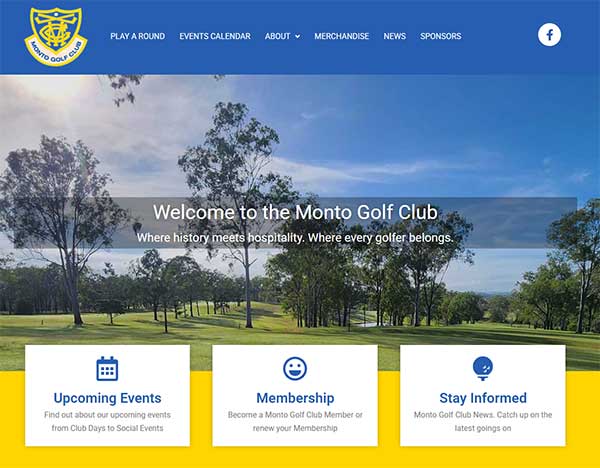
A big thank you to the Team at the Monto Golf Club for engaging us for their new website.
Visit the new live website here
One of the most effective tools a sporting club can invest in is a well-designed website. A website serves as a central hub for information, promotion, and interaction.
Increased Membership Engagement
A primary benefit of a sporting club having a website is the opportunity to increase engagement with current and potential members. Members can access essential information at any time, including match schedules, training sessions, and club announcements. By providing this convenience, clubs demonstrate professionalism and reliability, which encourages members to stay involved and active. Engagement directly translates into retention rates, meaning fewer members drop out and the club maintains a stable income through membership fees.
Websites also allow for interactive features, such as forums, polls, and event registration forms. These tools encourage members to actively participate in club activities, providing a sense of belonging. When members feel connected and engaged, they are more likely to purchase merchandise, attend fundraising events, and promote the club to their social circles, all of which can increase revenue.
Enhanced Sponsorship Opportunities
Sponsorship is a critical revenue stream for many sporting clubs, and having a website can significantly enhance these opportunities. A professional online presence demonstrates that a club is organized and forward-thinking, making it more attractive to potential sponsors. Sponsors want to associate with clubs that have visibility, both offline and online. A website provides a platform to showcase sponsors prominently through logos, banner placements, and sponsor profiles.
Additionally, a website can include statistics and engagement metrics that sponsors value, such as website traffic, social media reach, and email newsletter subscribers. By presenting this data, clubs can provide potential sponsors with evidence of the exposure they would receive, increasing the likelihood of securing sponsorship deals. This visibility translates to higher sponsorship fees, directly contributing to the club’s profitability.
Merchandise Sales and Online Shop
Another clear financial benefit of having a website is the ability to sell merchandise online. Sporting clubs often sell jerseys, hats, scarves, and other branded products to their members and supporters. A website allows the club to operate an online store 24/7, providing a convenient shopping experience for fans. This accessibility increases sales opportunities beyond match days or club events.
Moreover, an online shop enables the club to reach a broader audience, including supporters who live outside the local area. This expanded market can lead to significant additional revenue streams. Offering seasonal promotions, discounts, or exclusive items online can further boost sales and create a loyal customer base.
Streamlined Event Management
Sporting clubs frequently host events such as tournaments, training camps, social gatherings, and fundraisers. Organizing these events can be time-consuming and costly if managed manually. A website can simplify event management by providing online registration, payment processing, and automated notifications to attendees. This reduces administrative costs and errors while enhancing the attendee experience.
By making events easier to access and attend, clubs can increase participation rates. Higher attendance means more revenue from registration fees, concessions, and other event-related sales. Efficient event management also frees up staff and volunteers to focus on other revenue-generating activities, further benefiting the club financially.
Marketing and Community Outreach
A website serves as a marketing tool, allowing a sporting club to reach both local and global audiences. By providing news updates, player profiles, and highlights of past matches, the club can maintain an active presence and attract interest from new members and supporters. Marketing through a website is cost-effective compared to traditional advertising channels like print media or television, which can be expensive and limited in reach.
A well-maintained website also supports community outreach efforts. Clubs can promote social initiatives, youth programs, and charitable activities, strengthening their reputation and building goodwill within the community. A strong community presence often attracts volunteers and donations, both of which contribute to financial sustainability.
Improved Communication and Administration
Effective communication is critical for any sporting club, and a website provides a central location for all communications. Clubs can post updates, notices, and policy changes in real time, ensuring that members are informed promptly. This reduces misunderstandings and administrative overhead, saving time and resources.
Websites can also integrate tools for membership management, including databases for player profiles, attendance tracking, and payment history. By automating these administrative functions, clubs can reduce labor costs and improve operational efficiency. These savings directly impact the club’s bottom line, allowing more funds to be allocated to programs, equipment, and facilities.
Boosting Credibility and Professionalism
Finally, a website enhances a sporting club’s credibility and professionalism. A well-designed website demonstrates that the club is organized, trustworthy, and committed to providing a quality experience for members and supporters. This perception is crucial for attracting new members, sponsors, and volunteers. People are more likely to engage with a club that presents itself professionally, and this engagement can convert into financial support through memberships, sponsorships, and donations.
Conclusion
A sporting club’s website is much more than just an online presence—it is a powerful tool for generating revenue, engaging members, attracting sponsors, and improving operations. By providing easy access to information, facilitating online sales and registrations, supporting marketing and community outreach, and showcasing professionalism, a website can significantly enhance a club’s profitability. For clubs looking to thrive in today’s competitive and digital-focused environment, investing in a quality website is a strategic decision with tangible financial benefits. In the long term, a website is not just a communication tool—it is an essential component of a profitable, sustainable, and well-managed sporting club.