




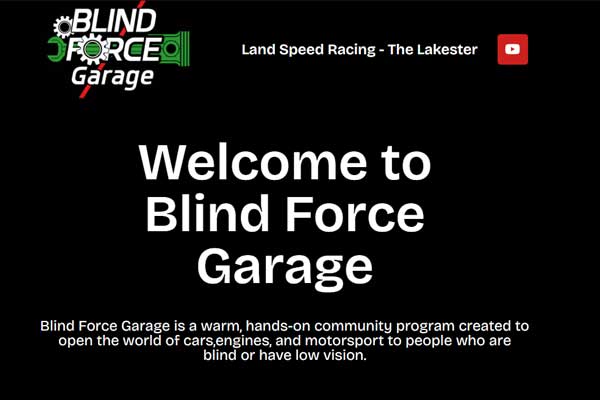
Thank You Gary for having us create your showcase website. For Gary we created a simple website presenting Blind Force who they are and providing a simple contact scenario. We are also proud to be sponsoring this website for him and wish Blind Force Garage a lot of success
https://blindforcegarage.au/
What Is a Showcase Website for a Community Program?
A showcase website is designed to present a community program in a clear, engaging and accessible way. Rather than focusing on online sales, its primary purpose is to inform visitors, build trust, encourage participation and demonstrate the value of the program. It acts as a central source of information where community members, volunteers, supporters, funding organisations and other stakeholders can learn about the program’s purpose, activities and achievements.
Community programs often rely on strong relationships and public confidence. A professional website helps communicate the organisation’s mission while making it easier for people to understand how they can become involved. Whether the program supports health, education, sport, youth development, environmental conservation, disability services or local cultural initiatives, the website serves as a digital representation of its values and commitment to the community.
Unlike a complex online store, a showcase website places the emphasis on storytelling, accessibility and communication. Every page should help visitors quickly understand who the organisation is, what it does and why its work matters.
Presenting the Organisation’s Mission
One of the most important functions of a community program website is explaining the organisation’s mission. Visitors should immediately understand the purpose of the program and the community needs it addresses.
A well-written introduction provides context without overwhelming readers with unnecessary detail. It should explain the problems the organisation aims to solve, the people it supports and the positive outcomes it strives to achieve.
Clear messaging helps build credibility. When people understand an organisation’s goals, they are more likely to volunteer, donate, participate or recommend the program to others.
The mission should be reinforced throughout the website using consistent language that reflects the organisation’s values and long-term objectives.
Highlighting Programs and Services
Most community organisations offer multiple activities or services. A showcase website allows each of these to be presented in an organised and informative way.
Individual program pages can explain who each service is designed for, how participants become involved, what support is available and what outcomes people can expect. Providing practical information reduces confusion and answers many of the common questions visitors may have before making contact.
Photographs of activities, facilities or community events can also help demonstrate the program in action. Authentic images often provide greater confidence than generic marketing material because they illustrate real community engagement.
Keeping service information current is equally important. Accurate descriptions ensure visitors receive reliable information and understand exactly what the organisation offers.
Building Trust Through Transparency
Trust is essential for community organisations. Many rely on volunteers, donations, grants or partnerships, making transparency an important part of maintaining public confidence.
A showcase website can explain the organisation’s history, governance structure, leadership team and community partnerships. This information demonstrates accountability while helping visitors understand how the organisation operates.
Sharing annual achievements, major milestones and measurable outcomes can also reinforce credibility. Rather than making exaggerated claims, organisations should present factual information that accurately reflects their work and impact.
Testimonials from participants, volunteers or community partners can further strengthen trust when they represent genuine experiences.
Encouraging Community Participation
A successful community program depends upon participation. The website should make it simple for visitors to take the next step, whether that involves volunteering, attending events, becoming a member or requesting additional information.
Clear contact information, enquiry forms and easy-to-find participation details reduce barriers for potential supporters. Visitors should never have to search extensively to find out how to become involved.
Event calendars are also valuable for organisations that regularly conduct workshops, meetings, fundraising activities or community gatherings. Keeping event information current encourages greater attendance while demonstrating that the organisation remains active within the community.
The easier it is for people to engage, the more effective the website becomes as a communication tool.
Demonstrating Community Impact
People naturally want to know whether a community program is making a positive difference. A showcase website provides opportunities to present achievements through factual information and meaningful examples.
Statistics such as the number of participants served, volunteer hours contributed, community projects completed or educational sessions delivered can help demonstrate organisational activity when accurately reported.
Case studies can also illustrate how the program has supported individuals or groups while respecting privacy and confidentiality. These stories provide context that helps visitors understand the practical outcomes of the organisation’s work.
Demonstrating impact is not about making unrealistic promises. Instead, it involves presenting accurate evidence that reflects the organisation’s genuine contribution to the community.
Accessibility and User Experience
Community websites should be designed with accessibility in mind. Visitors may include people of different ages, abilities and levels of digital experience.
Simple navigation, readable typography, clear headings and logical page structures help users find information efficiently. Mobile-friendly design is equally important because many visitors access websites using smartphones or tablets.
Fast loading pages improve usability while encouraging visitors to continue exploring the website. Clear language also supports accessibility by making information easier to understand for a wider audience.
Accessibility benefits everyone, not only individuals with disabilities. A straightforward website provides a better experience for all users.
Keeping Information Current
A community program evolves over time. New initiatives begin, events are scheduled, staff members change and services expand or adapt to meet local needs.
Regular website updates ensure visitors receive accurate information. Outdated content can create confusion and reduce confidence in the organisation.
News sections, project updates and recent achievements help demonstrate that the organisation remains active and engaged. Fresh content also encourages returning visitors to continue following the program’s activities.
Maintaining current information should form part of the organisation’s ongoing communication strategy rather than being treated as an occasional task.
Conclusion
A showcase website provides far more than an online presence for a community program. It serves as a trusted information resource that explains the organisation’s purpose, highlights its services, demonstrates community impact and encourages meaningful participation.
By presenting accurate information, maintaining transparency and offering an accessible user experience, the website helps strengthen relationships with participants, volunteers, supporters and funding bodies alike. As community organisations continue to communicate with increasingly digital audiences, a professionally maintained showcase website remains an essential tool for sharing their mission, celebrating achievements and supporting long-term community engagement.